• IP addresses are NOT logged in this forum so there's no point asking. Please note that this forum is full of homophobes, racists, lunatics, schizophrenics & absolute nut jobs with a smattering of geniuses, Chinese chauvinists, Moderate Muslims and last but not least a couple of "know-it-alls" constantly sprouting their dubious wisdom. If you believe that content generated by unsavory characters might cause you offense PLEASE LEAVE NOW! Sammyboy Admin and Staff are not responsible for your hurt feelings should you choose to read any of the content here.

    The OTHER forum is HERE so please stop asking.

Shall I get the LeicaQ3 in Gun Metal Grey

Leongsam

High Order Twit / Low SES subject
Admin
Asset
Joined
Jul 10, 2008
Messages
67,740
Points
113
Screenshot 2026-06-19 at 3.31.20 PM.png
 
How is it better than a Sony alpha V? Sure it’s smaller, then I will say get a good phone with leica lenses.
 
How is it better than a Sony alpha V? Sure it’s smaller, then I will say get a good phone with leica lenses.

There is no way a phone camera can match the dynamics and optical quality of a proper camera. Camera phones achieve good results via the image processor not the optics.
 
**Smartphone cameras overcome their physical limitations primarily through advanced **computational photography**—heavy software processing, AI/machine learning, and multi-frame techniques—rather than raw optical or sensor superiority.**

### The Physical Challenges
- **Tiny sensors**: Modern phone sensors are often around 5 × 4 mm (e.g., roughly 1/1.3" to 1/2.5" formats), compared to a full-frame DSLR's 36 × 24 mm sensor—over 30–50× larger in area. Smaller sensors capture far fewer photons for a given exposure, leading to more noise, lower dynamic range, and diffraction limits at small apertures.
- **Mediocre optics**: Phone lenses are compact (often plastic elements, fixed or limited apertures like f/1.5–f/2.0, short focal lengths). They suffer from aberrations, distortion, vignetting, and lower resolution/sharpness than premium glass on dedicated cameras. The small aperture also limits light gathering.

Despite this, phones produce "acceptable" (and often excellent for social media/web viewing) images through clever engineering.

### How Phones Compensate: Key Techniques

1. **Computational Photography & Burst/Multi-Frame Processing**
Phones don't just capture one frame—they often shoot a burst of images (sometimes before you fully press the shutter) and merge them. This includes:
- **Noise reduction**: Averaging multiple frames reduces random noise (temporal denoising). Algorithms align frames to handle motion.
- **HDR (High Dynamic Range)**: Merge short and long exposures to recover highlights and shadows.
- **Super-resolution**: Sub-pixel shifts across frames allow reconstructing finer detail than the sensor's native resolution.
- **Low-light/Night modes**: Stack many short exposures (with alignment and selective merging to avoid blur from moving subjects) for brighter, cleaner results.

This effectively simulates better light gathering and optics via software.

2. **Pixel Binning and Modern Sensor Designs**
Sensors use technologies like Quad Bayer or Nonacell arrays. Adjacent pixels (e.g., 4 or 9) are combined ("binned") into one larger effective pixel during low-light shots. This boosts light sensitivity and reduces noise at the cost of resolution. In good light, the full resolution is used. Larger individual pixels or stacked sensor designs also help.

3. **AI and Scene Understanding**
- Machine learning models detect scenes, faces, objects, and lighting.
- They apply targeted enhancements: sharpening, color correction, tone mapping, and detail hallucination (reconstructing plausible textures).
- **Portrait mode**: Uses depth mapping (from dual cameras, ToF sensors, or focus stacking) to simulate shallow depth of field and bokeh, which small sensors naturally lack (they have deep DOF).
- Semantic segmentation and inpainting fix issues like lens distortions or fill in details.

4. **Multiple Specialized Cameras + Fusion**
Flagships have 3–5 rear cameras (main, ultrawide, telephoto, sometimes macro or depth). The phone fuses data from them for better results, digital zoom without as much quality loss, and features like seamless switching. Optical image stabilization (OIS) on some modules helps too.

5. **Image Signal Processor (ISP) and Dedicated Hardware**
Modern phones have powerful ISPs, NPUs (neural processing units), and massive compute power dedicated to imaging. This allows real-time or near-real-time processing that dedicated cameras historically couldn't match in-camera.

### Trade-offs and Limitations
- Phones excel in well-lit or everyday scenarios, dynamic range, convenience, and features like instant HDR or night shots. Processed JPEGs look great on screens.
- They still lag dedicated cameras in extreme low light (without long exposures), raw flexibility, shallow depth of field for artistic portraits (it's faked), and maximum detail/resolution for large prints or heavy cropping. Computational "hallucinations" can sometimes look unnatural upon close inspection.
- Raw/DNG files from phones (if available) often look worse because they bypass much of this processing.

In short, hardware sets a baseline, but **software bridges (and often exceeds) the gap** for typical use cases. Advances in sensors, AI, and processing power have let phones punch far above their physical weight, which is why they've largely replaced compact cameras. For the absolute best quality, larger sensors and optics in dedicated cameras still win in many professional or demanding scenarios—but the gap has narrowed dramatically.
 
There is no way a phone camera can match the dynamics and optical quality of a proper camera. Camera phones achieve good results via the image processor not the optics.

take upskirt pics also need so expensive camera meh ?

somemore so big......how to be discreet ?
 
take upskirt pics also need so expensive camera meh ?

somemore so big......how to be discreet ?

I don't take "upskirt pix". I ask my model to undress and take images of her absolutely naked with her legs spread apart. The result is way better.

This image was taken with the Q3 43mm. The metal grey version has a 28mm lens for a wider field of vision. The resolution is stunning.

L1000598-1.jpg
 
Last edited:
There is no way a phone camera can match the dynamics and optical quality of a proper camera. Camera phones achieve good results via the image processor not the optics.
Let’s put it this way, if u have the time to download the RAW huge image files taken from a camera and then edit them one by one, then go through way of the Leica. If you just want nice looking pics without much work, then go for the phone.
 
Let’s put it this way, if u have the time to download the RAW huge image files taken from a camera and then edit them one by one, then go through way of the Leica. If you just want nice looking pics without much work, then go for the phone.

With a camera you can do both. If I'm doing studio work and want the ultimate in image quality I'll shoot DNG files which gives me the widest latitude when editing.

However if I set out on a holiday and just need good quality snapshots I can set the camera to process the files and output jpgs. The camera itself gives me a choice of recipes for a particular look to suit the occasion.
 
digitalcameraworld.com


This rare Leica MP-33 just sold for nearly $700,000 – but a 1938 camera delivered the biggest auction surprise​


Sebastian Oakley

5–6 minutes


Letiz Auction NO.48
(Image credit: Leica)
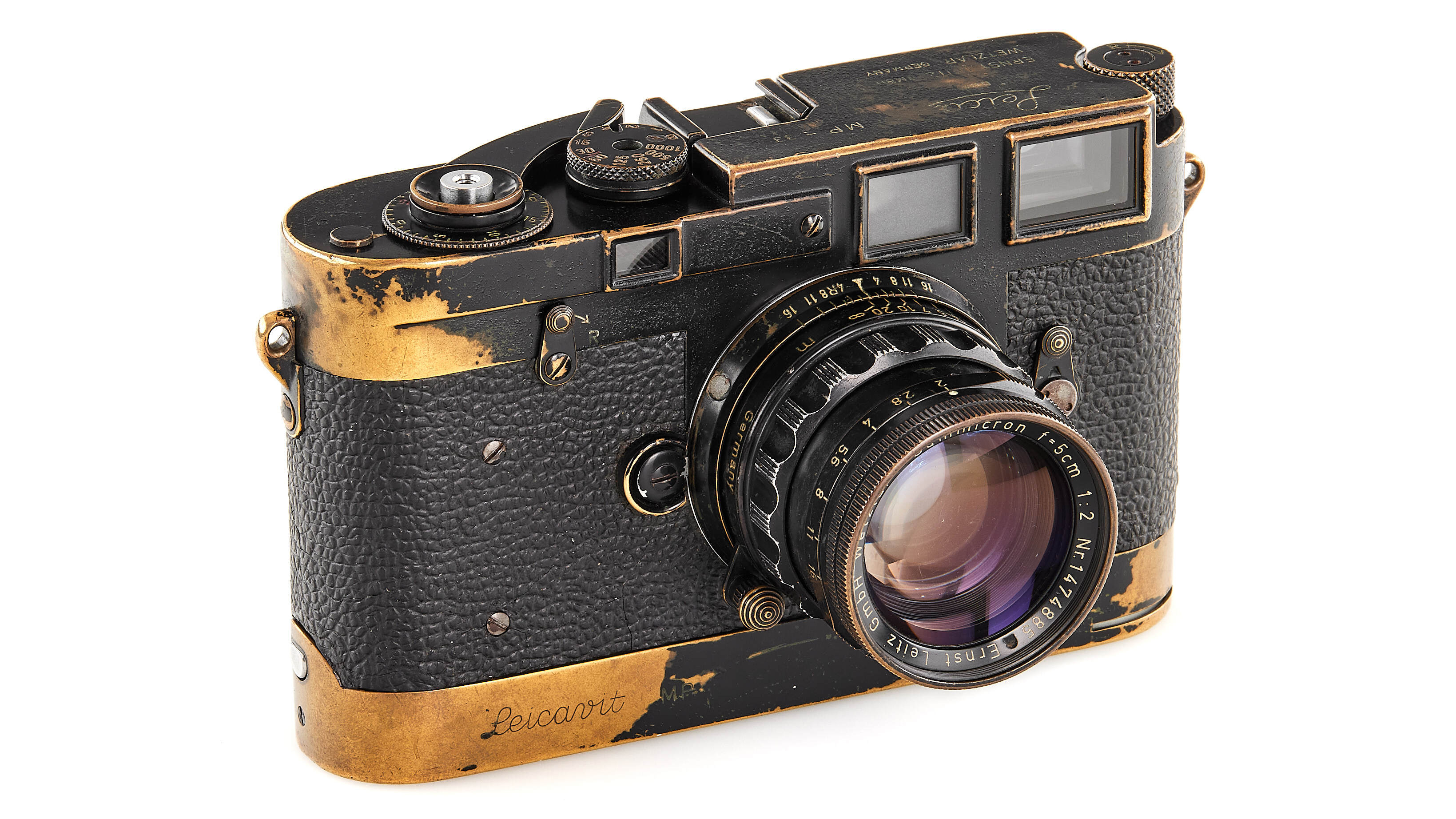
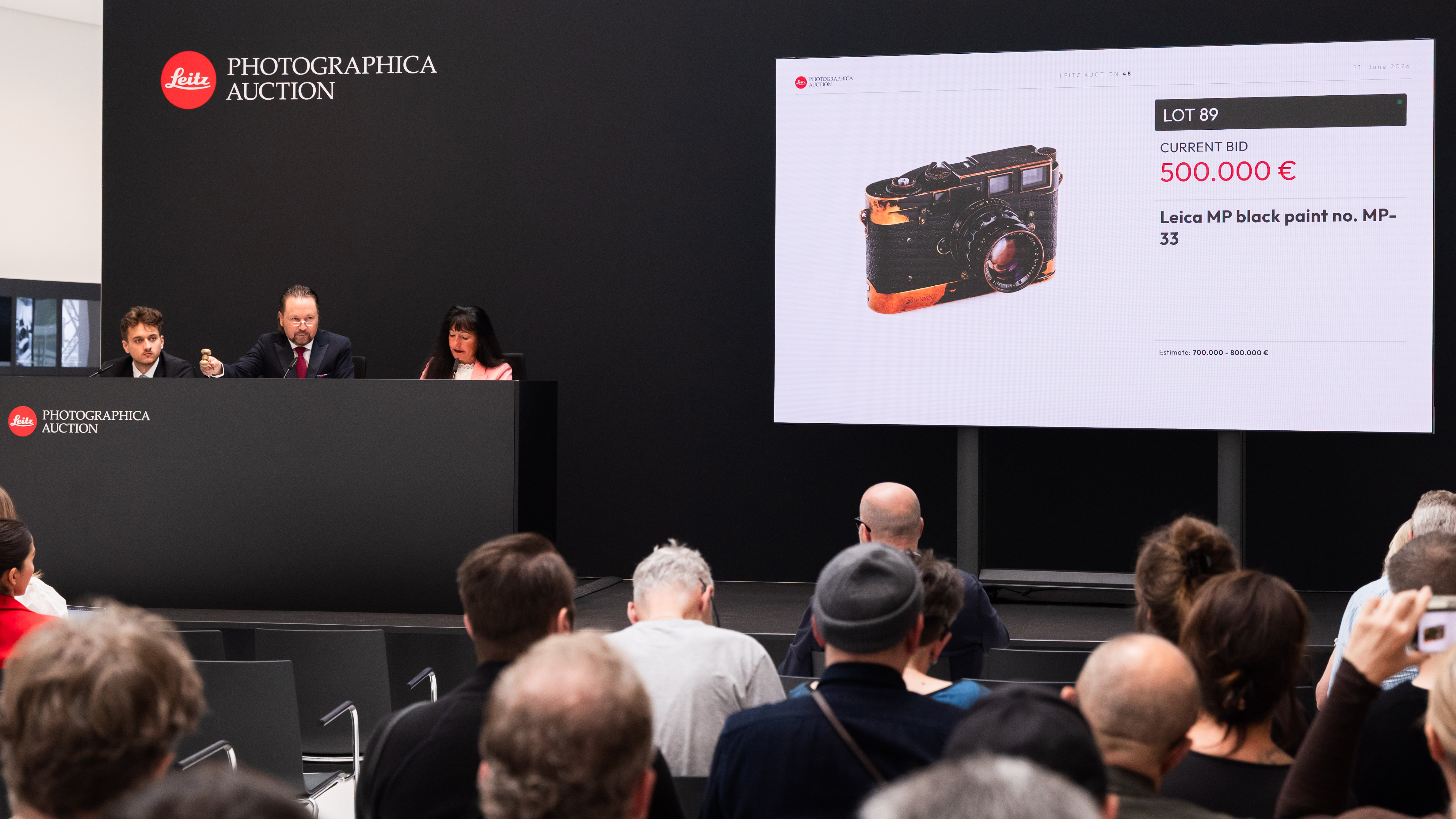
Rare Leica cameras have once again commanded extraordinary prices at auction, with a black-paint Leica MP-33 selling for €600,000, or approximately $696,000, during Leitz Photographica Auction 48 in Wetzlar, Germany.

Held at the World of Leica on June 13, the auction brought together some of the rarest and most historically important Leica cameras in existence. While the MP-33 was the headline lot, it was far from the only camera to achieve a staggering result.

Produced in 1957, the Leica MP-33 is one of just 402 original M Professional cameras ever made, with only 141 finished in black paint. The model was developed following requests from prominent American press photographers, including Alfred Eisenstaedt and David Douglas Duncan, who wanted an M-series camera capable of being used with the Leicavit rapid winder.

Leitz Auction NO.48

(Image credit: Leica)
The example sold at auction was originally delivered to Brandt in Sweden on July 29, 1957. It came with a matching black-paint Leicavit and a brass-mount Summicron 50mm f/2 lens, helping it reach a final price of €600,000 (approximately $696,000) including the buyer’s premium.

Another major result came from the Leica Ig prototype carrying the wonderfully distinctive serial number 750000. Produced around 1953, the experimental screw-mount camera combines design and construction elements from the Leica Ic, If, and Ig, including an unusual raised flash platform. It ultimately sold for €540,000 - roughly $627,000.

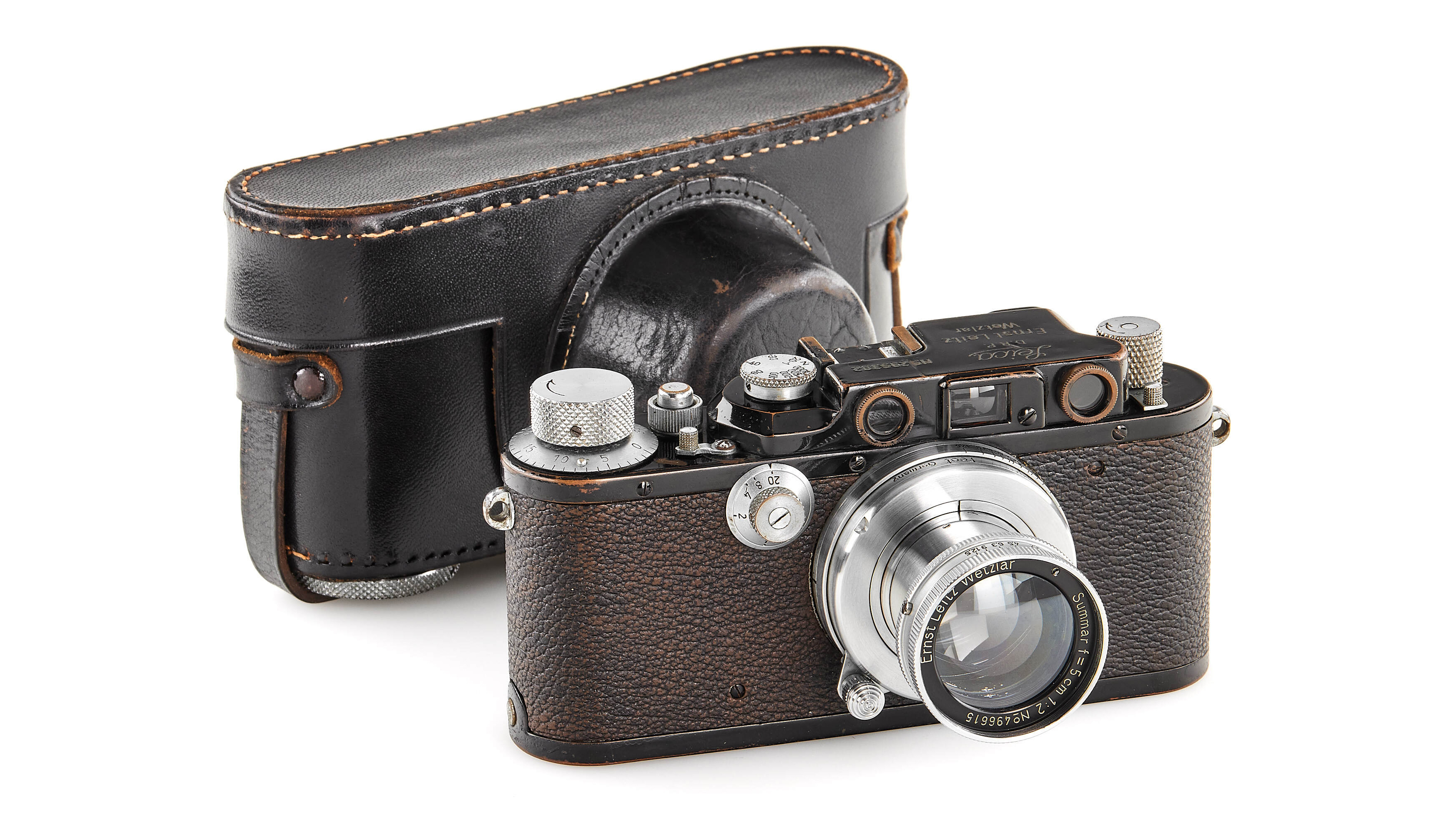
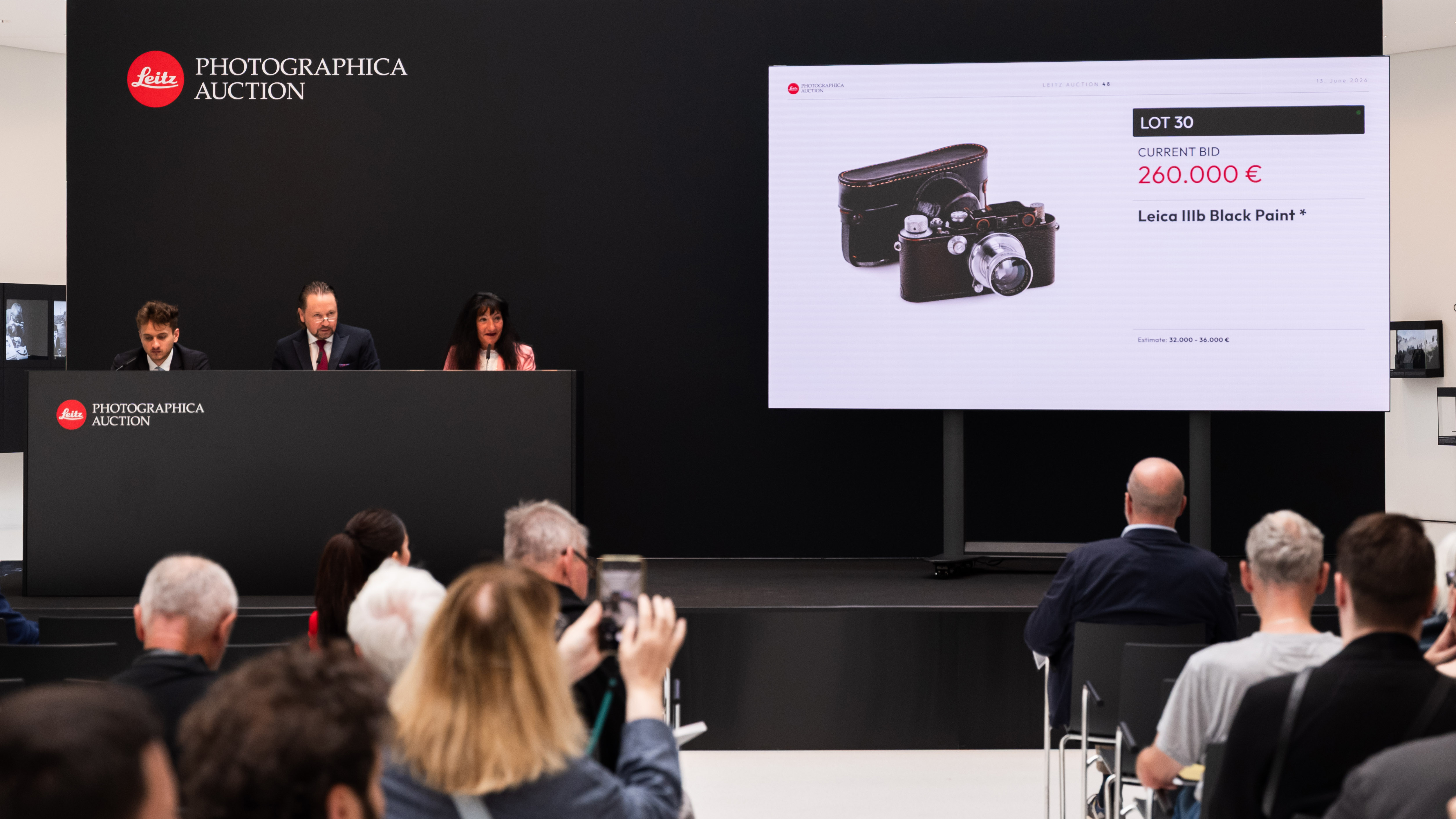
However, the biggest surprise of the auction was a black-paint Leica IIIb from 1938. Leica IIIb cameras are normally found in chrome, but Leica’s archives show that only five black-paint examples were produced and shipped to New York. Estimated at between €32,000 and €36,000, around $37,000 to $42,000, the camera eventually sold for an incredible €312,000 ( $362,000)

Leitz Auction NO.48

(Image credit: Leica)
It was not only Leica’s earliest cameras attracting attention. A Leica MP 10323 Meister Edition Berlin outfit from 2017, one of only 10 produced, sold for €132,000, approximately $153,000. Its original estimate had been just €26,000 to €30,000, or roughly $30,000 to $35,000.

The best camera deals, reviews, product advice, and unmissable photography news, direct to your inbox!
The Leica M6 Black Paint Leitz Auction Set also demonstrated the growing demand for modern limited editions. Originally released in 2023 for €25,980, around $30,000, the set sold for €48,000, approximately $56,000. Meanwhile, the Leica M Edition 70 achieved €36,000, or around $42,000, comfortably exceeding its original €22,500 retail price.

A bright-green prototype of the Leica M10-P Safari was also sold as a charity lot. Engraved P08/08 beneath its base plate, the prototype achieved €16,000, approximately $18,600, with the full proceeds going to the Austrian charity Licht ins Dunkel.

Letiz Auction NO.48

(Image credit: Leica)
These prices may appear astonishing, but they show that enthusiasm for rare Leica cameras remains incredibly strong. What is particularly interesting is that collectors are no longer concentrating solely on historic models; recent limited editions and prototypes are rapidly becoming serious collector’s pieces in their own right.

Leitz Photographica Auction will return later this year, with its Perspectives photography auction taking place in Vienna on October 9, followed by Leitz Photographica Auction 49 at Leica Welt in Wetzlar on November 28.
For nearly two decades Sebastian's work has been published internationally. Originally specializing in Equestrianism, his visuals have been used by the leading names in the equestrian industry such as The Fédération Equestre Internationale (FEI), The Jockey Club, Horse & Hound, and many more for various advertising campaigns, books, and pre/post-event highlights.

He is a Fellow of the Royal Society of Arts, holds a Foundation Degree in Equitation Science, and holds a Master of Arts in Publishing. He is a member of Nikon NPS and has been a Nikon user since his film days using a Nikon F5. He saw the digital transition with Nikon's D series cameras and is still, to this day, the youngest member to be elected into BEWA, the British Equestrian Writers' Association.

He is familiar with and shows great interest in 35mm, medium, and large-format photography, using products by Leica, Phase One, Hasselblad, Alpa, and Sinar. Sebastian has also used many cinema cameras from Sony, RED, ARRI, and everything in between. He now spends his spare time using his trusted Leica M-E or Leica M2, shooting Street/Documentary photography as he sees it, usually in Black and White.

 
Back
Top