
• IP addresses are NOT logged in this forum so there's no point asking. Please note that this forum is full of homophobes, racists, lunatics, schizophrenics & absolute nut jobs with a smattering of geniuses, Chinese chauvinists, Moderate Muslims and last but not least a couple of "know-it-alls" constantly sprouting their dubious wisdom. If you believe that content generated by unsavory characters might cause you offense PLEASE LEAVE NOW! Sammyboy Admin and Staff are not responsible for your hurt feelings should you choose to read any of the content here.

    The OTHER forum is HERE so please stop asking.

UK Deputy PM Says Equality Before Law Doesn’t Mean Treating All Ethnic Groups the ‘Same’ After Nowak Killing

duluxe

Alfrescian
Loyal
Joined
Mar 11, 2013
Messages
17,360
Points
113
British Deputy Prime Minister David Lammy has said that not all ethnic groups should be treated the same by police in the wake of the murder of 18-year-old Henry Nowak, who died in police handcuffs after officers refused to believe he had been stabbed by a Sikh man (@Sikodolaukazzz ).
Lammy, who also serves as the left-wing Labour Party government’s Justice Secretary, said that while the “starting point” should be equality before the law, it is not always appropriate to be treated “the same”, noting the disproportionate arrest rates of certain ethnic minority groups, such as Roma travellers [Gypsies] and black Britons.

“We are all equal before the law. So that is not the starting point, but it is the case. Recognising that in our country it is still the case that on arrest, prosecution, and conviction, I’m afraid in our prisons, ethnic minorities are disproportionately [represented] in the criminal justice system. So context can matter, but it cannot eclipse violence or the fact that we need our police to act to mitigate and deal with crimes in our communities, whatever the color of your skin or background,” he told the BBC’s Laura Kuenssberg on Saturday.


The BBC presenter put to Lammy the guidance from the National Police Chiefs’ Council on its anti-racism policy, which states: “Our commitment to racial equity means producing equality of policing outcomes for people from different ethnic groups… It does not mean treating everyone ‘the same’ or being ‘colour blind’ (racial equality).”

The leftist government minister denied that this meant that there was not equality before the law, stating that “the complexity is [that] equality does not always necessarily mean the same” and that it is important to “understand that context can be different for different groups.”

Lammy, who has long been at the forefront of pushing racialised politics in Britain, said that now he does not believe that police are institutionally racist in the country, claiming that the UK has “moved on from that period”. He also rejected the notion that there is “two-tier” policing in which ethnic and religious minorities are treated with special dispensation, often at the expense of the native population.

This was rejected by Reform UK Shadow Home Secretary Zia Yusuf, who said on Sunday that he believes the police are institutionally racist against white people, citing the NPCC policy guidance as evidence.


“The only way we can ensure that we do not have another situation like the tragedy of Henry’s death is through political means,” Yusuf told the BBC. “That’s why we’re going to continue to make the argument. And nobody is going to guilt-trip us into not making these arguments.”

Justice Secretary Lammy also rejected comments from U.S. Vice President JD Vance, who blamed Nowak’s death on the mass migration.


“He should still be alive today, and he would be if the last few generations of European elites had stood their ground against the politics of self-hatred and the mass invasion of migrants, many of whom despise the West and the people who love it,” Vance remarked on Friday.


Lammy, who was born in Britain to Guyanese migrant parents, rejected this analysis by the Vice President, proclaiming that the murderer of Nowak, Vikrum Digwa, “was a Brit”. Despite his mother immigrating to the country from India, Lammy argued that Vikrum’s crimes had “nothing to do with mass migration”.


The Deputy PM, who is said to have struck a friendship with Vance despite their political divisions, said that during a recent phone conversation, he told Vance that he thought it was wrong about the case.
 
British Deputy Prime Minister David Lammy has said that not all ethnic groups should be treated the same by police in the wake of the murder of 18-year-old Henry Nowak, who died in police handcuffs after officers refused to believe he had been stabbed by a Sikh man (@Sikodolaukazzz ).
Lammy, who also serves as the left-wing Labour Party government’s Justice Secretary, said that while the “starting point” should be equality before the law, it is not always appropriate to be treated “the same”, noting the disproportionate arrest rates of certain ethnic minority groups, such as Roma travellers [Gypsies] and black Britons.

“We are all equal before the law. So that is not the starting point, but it is the case. Recognising that in our country it is still the case that on arrest, prosecution, and conviction, I’m afraid in our prisons, ethnic minorities are disproportionately [represented] in the criminal justice system. So context can matter, but it cannot eclipse violence or the fact that we need our police to act to mitigate and deal with crimes in our communities, whatever the color of your skin or background,” he told the BBC’s Laura Kuenssberg on Saturday.


The BBC presenter put to Lammy the guidance from the National Police Chiefs’ Council on its anti-racism policy, which states: “Our commitment to racial equity means producing equality of policing outcomes for people from different ethnic groups… It does not mean treating everyone ‘the same’ or being ‘colour blind’ (racial equality).”

The leftist government minister denied that this meant that there was not equality before the law, stating that “the complexity is [that] equality does not always necessarily mean the same” and that it is important to “understand that context can be different for different groups.”

Lammy, who has long been at the forefront of pushing racialised politics in Britain, said that now he does not believe that police are institutionally racist in the country, claiming that the UK has “moved on from that period”. He also rejected the notion that there is “two-tier” policing in which ethnic and religious minorities are treated with special dispensation, often at the expense of the native population.

This was rejected by Reform UK Shadow Home Secretary Zia Yusuf, who said on Sunday that he believes the police are institutionally racist against white people, citing the NPCC policy guidance as evidence.


“The only way we can ensure that we do not have another situation like the tragedy of Henry’s death is through political means,” Yusuf told the BBC. “That’s why we’re going to continue to make the argument. And nobody is going to guilt-trip us into not making these arguments.”

Justice Secretary Lammy also rejected comments from U.S. Vice President JD Vance, who blamed Nowak’s death on the mass migration.


“He should still be alive today, and he would be if the last few generations of European elites had stood their ground against the politics of self-hatred and the mass invasion of migrants, many of whom despise the West and the people who love it,” Vance remarked on Friday.


Lammy, who was born in Britain to Guyanese migrant parents, rejected this analysis by the Vice President, proclaiming that the murderer of Nowak, Vikrum Digwa, “was a Brit”. Despite his mother immigrating to the country from India, Lammy argued that Vikrum’s crimes had “nothing to do with mass migration”.


The Deputy PM, who is said to have struck a friendship with Vance despite their political divisions, said that during a recent phone conversation, he told Vance that he thought it was wrong about the case.

Why not ask your Modi what is he doing about the 3 Indian sailors murdered by Trump
 
British Deputy Prime Minister David Lammy has said that not all ethnic groups should be treated the same by police in the wake of the murder of 18-year-old Henry Nowak, who died in police handcuffs after officers refused to believe he had been stabbed by a Sikh man (@Sikodolaukazzz ).
Lammy, who also serves as the left-wing Labour Party government’s Justice Secretary, said that while the “starting point” should be equality before the law, it is not always appropriate to be treated “the same”, noting the disproportionate arrest rates of certain ethnic minority groups, such as Roma travellers [Gypsies] and black Britons.

“We are all equal before the law. So that is not the starting point, but it is the case. Recognising that in our country it is still the case that on arrest, prosecution, and conviction, I’m afraid in our prisons, ethnic minorities are disproportionately [represented] in the criminal justice system. So context can matter, but it cannot eclipse violence or the fact that we need our police to act to mitigate and deal with crimes in our communities, whatever the color of your skin or background,” he told the BBC’s Laura Kuenssberg on Saturday.


The BBC presenter put to Lammy the guidance from the National Police Chiefs’ Council on its anti-racism policy, which states: “Our commitment to racial equity means producing equality of policing outcomes for people from different ethnic groups… It does not mean treating everyone ‘the same’ or being ‘colour blind’ (racial equality).”

The leftist government minister denied that this meant that there was not equality before the law, stating that “the complexity is [that] equality does not always necessarily mean the same” and that it is important to “understand that context can be different for different groups.”

Lammy, who has long been at the forefront of pushing racialised politics in Britain, said that now he does not believe that police are institutionally racist in the country, claiming that the UK has “moved on from that period”. He also rejected the notion that there is “two-tier” policing in which ethnic and religious minorities are treated with special dispensation, often at the expense of the native population.

This was rejected by Reform UK Shadow Home Secretary Zia Yusuf, who said on Sunday that he believes the police are institutionally racist against white people, citing the NPCC policy guidance as evidence.


“The only way we can ensure that we do not have another situation like the tragedy of Henry’s death is through political means,” Yusuf told the BBC. “That’s why we’re going to continue to make the argument. And nobody is going to guilt-trip us into not making these arguments.”

Justice Secretary Lammy also rejected comments from U.S. Vice President JD Vance, who blamed Nowak’s death on the mass migration.


“He should still be alive today, and he would be if the last few generations of European elites had stood their ground against the politics of self-hatred and the mass invasion of migrants, many of whom despise the West and the people who love it,” Vance remarked on Friday.


Lammy, who was born in Britain to Guyanese migrant parents, rejected this analysis by the Vice President, proclaiming that the murderer of Nowak, Vikrum Digwa, “was a Brit”. Despite his mother immigrating to the country from India, Lammy argued that Vikrum’s crimes had “nothing to do with mass migration”.


The Deputy PM, who is said to have struck a friendship with Vance despite their political divisions, said that during a recent phone conversation, he told Vance that he thought it was wrong about the case.
Wow…Englandistan like go back to Medieval Time aka Animial Farm style
 
The 3 Bayi sailor … RIP

The 3 were not Sikhs.

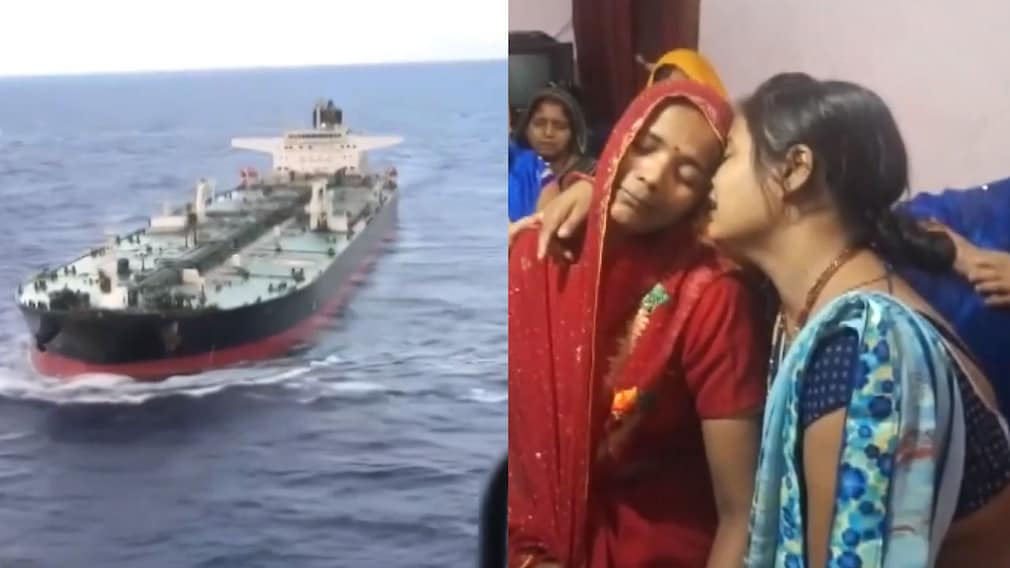
The three Indian sailors killed in a U.S. military strike on an oil tanker are Aditya Sharma (deck cadet), Shivanand Chaurasiya (engine fitter), and Patnala Suresh (chief engineer).

The mariners lost their lives when the U.S. Central Command struck the Palau-flagged tanker MT Settebello in the Gulf of Oman. The U.S. military fired precision munitions into the ship's engine room, stating the vessel was targeted for allegedly violating an ongoing blockade on transporting Iranian oil.

What do you do when so many people relied on their sons/husband/father for their daily needs and love.

May God please bless these families in their times of extreme difficulty.


  • Jun 13, 2026 13:39 pm IST

Opinion | Why No 'Law' Can Bring Justice For 3 Indian Sailors Killed In US Attack​

This is Trump's war, and he will do whatever it is that he wants with his 'big beautiful' navy.

https://www.ndtv.com/opinion/why-no-law-can-bring-justice-for-3-indian-sailors-killed-by-us-11631220

Opinion | Why No 'Law' Can Bring Justice For 3 Indian Sailors Killed In US Attack


https://www.ndtv.com/authors/tara-kartha-8332

The tragic death of three Indian sailors in US attacks on a ship as part of its blockade of Iran has raised a storm of outrage, and not without reason. Never has the US been more unpopular in a country that normally is extremely friendly to Americans, even imitative of their culture. There are few equivalents in recent history of the use of extreme violence against civilian shipping, where completely unarmed sailors were targeted in what is not even a declared war. This is a dangerous trend. Others are watching.

That Bland Announcement

The US Central Command has since notified the hits. It says it 'disabled' an oil tanker in the Gulf of Oman on June 10 after it attempted to transport Iranian oil. In other words, it was in Omani waters, after "the crew repeatedly failed to comply with directions from US forces". Two more were 'disabled': Palau-flagged vessels Marivex and Settebello were hit, the first for attempting to sail to an Iranian port and the latter for "attempting" to transport Iranian oil. That means it was sailing empty, and was specifically in Oman's waters. Since the US is not at war with Oman, the whole operation needs to be examined in detail.

'I will come home safely': Indian sailor's last words to wife before a US strike killed him​


1781409590558.png


"He told me he would be home soon. I never imagined he would return like this," says Patnala Bhargavi, whose husband Patnala Suresh, an Indian sailor, was killed in a US strike near the Gulf of Oman this week.

The couple were looking forward to celebrating their 15th wedding anniversary this month. Instead, Bhargavi is trying to come to terms with a future without him.

Suresh was one of three Indian sailors killed when the US military struck the MT Settebello, an oil tanker, in the Gulf of Oman on Wednesday. The attack was part of Washington's effort to enforce a blockade on Iran-linked shipping, with the US military saying the tanker had ignored repeated warnings and was carrying Iranian oil. The vessel's managers dispute that account, saying it had no connection to Iran and received no warning before it was hit. Twenty-one other crew members were rescued.

The deaths have reverberated across India, from Bhargavi's home in the coastal city of Visakhapatnam in Andhra Pradesh to towns and villages hundreds of kilometres away, where other families are mourning loved ones who left home to earn a living at sea.

As they grieve, many are also seeking answers about the circumstances of the strike and waiting for the sailors' bodies to be returned home.

In a post on X, Shipping Minister Sarbananda Sonowal said efforts were under way to bring the sailors' bodies back, describing their deaths as a "profound loss" to India's maritime community.

India has also lodged a strong protest with Washington over the strike, summoning a senior US diplomat and calling for an end to attacks on commercial vessels in the region.

For Bhargavi, however, the wider geopolitical fallout feels distant.

Visitors have barely stopped coming home since news of Suresh's death reached them. Amid the condolences, Bhargavi keeps returning to their last conversation.

"There have been attacks in this area and some people have been killed. But don't worry about me. I'll come home safely, and we'll celebrate our anniversary properly," she recalls him saying.

Surrounded by photographs of Suresh and their two children, the 39-year-old now struggles to reconcile that promise with her husband's death.

Suresh had spent around 15 years at sea, working as a marine engineer and travelling the world.

As the ship's chief engineer, he was entitled to six months' leave each year. But he rarely took that much time off, according to his father Ramakrishna.

"He loved his work and preferred to spend most of his time at sea," he told the BBC.

His family had long grown accustomed to the months he spent away from home.

The couple usually spoke on video calls every few days, sometimes with other crew members joining in to say hello. But from 5 June, the calls became increasingly difficult. By 9 June, they had stopped altogether.

"I thought it was just a network problem because they were at sea," Bhargavi said.

For two days, she waited for news, before finally finding out that her husband had been killed in the strike.

At first, the family clung to hope that there had been some mistake and that Suresh would be found alive. But that hope quickly faded.

On Thursday, Bhargavi said the ship's management told the family that there had been no chance of escape when the strike happened. Suresh was inspecting a fault in one of the ship's generators at the time, she said.

The family is now calling for his body to be brought back to India and seeking financial assistance from the government, saying he was the household's sole breadwinner.


Suresh leaves behind two sons and two nieces he helped raise after Bhargavi's elder sister and brother-in-law died.

"The entire family depended on his income. Now I don't know how I'll educate or raise the children," Bhargavi says.


1781409704445.png


The same questions echo through the homes of the two other sailors killed in the strike.

In Hamirpur district in the northern state of Himachal Pradesh, the family of 23-year-old Aditya Sharma is mourning the loss of their only son.

"I want my son's body to be returned to us. We should also be told what happened in his final moments," his father, Rajesh Sharma, told BBC Hindi.

Rajesh Sharma also questioned whether enough had been done to save the crew.

"The others were rescued, so why couldn't these three be saved?" he asked.

More than 1,000km (621 miles) away in Deoria district in Uttar Pradesh, the family of 35-year-old Shivanand Chaurasia is grappling with the same grief.

A fitter by profession, Chaurasia had left home around eight months ago to work for a foreign shipping company.

"We spoke to him the night before last. He told us everything was fine," his father, Ramji Chaurasia, told ANI news agency. "Now we have been told that he is no more."

Like Bhargavi in Visakhapatnam, both families are waiting for their loved ones' bodies to be returned.


For them, the geopolitical tensions that brought the tanker into the spotlight feel far away. What matters now is the chance to see their sons and husbands one last time, they say.

https://www.bbc.com/news/articles/cx24vlj2nvyo
 
Back
Top