

- Joined
- Sep 11, 2010
- Messages
- 42,046
- Points
- 113
BREAKING NEWS: Trump made five trade demands — Canada rejected every single one  .CT
.CT
Posted February 7, 2026
What just unfolded between the United States and Canada wasn’t diplomatic stubbornness or political theater. It was a power shift — quiet, precise, and deeply unsettling for Washington.
During the review of North America’s core free trade agreement, the Trump administration laid out five conditions it said Canada must meet to preserve the deal long term.
Inside Washington, the assumption was automatic: Canada would negotiate, trade concessions for stability, and eventually bend.
It didn’t.
Prime Minister Mark Carney rejected every single demand — calmly, cleanly, and without drama. That moment didn’t just stall talks. It flipped the balance of leverage in North American trade.
Because here’s the part rarely said out loud: you don’t make five demands of a country you don’t need. You do it when your options are shrinking. Each demand wasn’t strength — it was exposure.
The first pressure point was dairy.
The U.S. framed its request as free-market fairness. The reality was far more urgent. American dairy producers are struggling. Global prices are volatile. Europe is saturated. Asia is fiercely competitive. Canada’s supply-managed dairy system — stable, protected, predictable — looked like a lifeline.
Carney didn’t hesitate. He didn’t negotiate quotas or timelines. He shut the door completely, locking supply management into law so no future government could quietly trade it away. That wasn’t defiance. It was insulation.
Next came digital media.
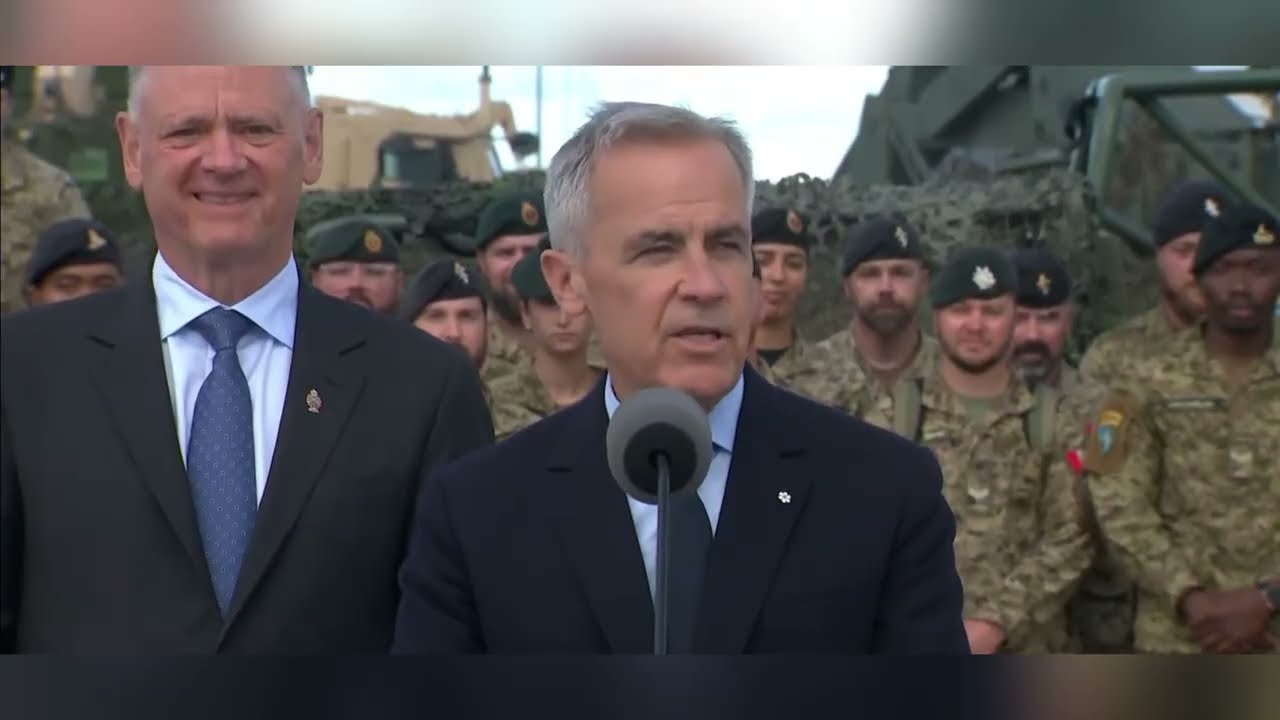
Washington claimed Canadian digital laws discriminated against U.S. tech firms. What it actually wanted was money — billions in advertising revenue, streaming income, and algorithmic control flowing south. Canada’s laws force tech giants to invest locally rather than extract endlessly.
Carney called it sovereignty. Because once a country gives up control of its media ecosystem, it never gets it back. Canada knows exactly what happens when smaller cultures rely entirely on foreign platforms to survive.
Then there was alcohol.
The U.S. demanded Canada lift provincial bans on American liquor — while keeping U.S. tariffs in place. That wasn’t compromise. It was punishment without relief. Carney didn’t argue. He simply refused to absorb costs without reciprocity. That silence carried more weight than any speech.
Government procurement came next.
Washington accused Canadian provinces of favoritism while simultaneously enforcing Buy American rules across U.S. infrastructure, defense, and federal spending. The contradiction was obvious. Carney didn’t rebut it. He let it stand. Hypocrisy doesn’t need a counterattack — it collapses on its own.
Finally came energy — the most revealing demand of all.
The United States imports nearly four million barrels of Canadian oil every day. Entire refinery systems, especially along the Gulf Coast, are designed specifically for Canadian crude. New England depends on Canadian electricity to survive winter peaks.
Energy doesn’t flow one way. And Carney knows that if this relationship fractures, the pain doesn’t land in Ottawa first. It lands in American fuel prices, American factories, and American households.
That’s why refusing everything was the smartest move Canada could make.
Saying no forced Washington to confront something it hasn’t faced in decades: dependence.
The silence around autos proved it. Automobiles weren’t even listed among U.S. demands — not because they’re unimportant, but because they’re too critical to threaten. North American auto manufacturing is stitched together across borders. Parts cross the Canada–U.S. line multiple times before a single car is finished.
Break that system, and it doesn’t bend. It breaks.
Detroit knows it. Suppliers know it. Workers know it. That’s why the loudest pressure isn’t coming from Canada — it’s coming from inside the United States.
Then there’s China.
Canada’s targeted trade arrangements with China weren’t about replacing the U.S. They were about proving Canada has options. And options change behavior. Countries with no alternatives negotiate out of fear. Countries with choices negotiate with confidence.
Washington noticed immediately. The tone hardened. The threats escalated. Because leverage only works when the other side believes you’re the only door.
Carney proved Canada has more than one.
While Trump posted threats and canceled invitations, Canada prepared quietly. Domestic procurement expanded. Critical mineral strategies tightened. European partnerships deepened. Provinces aligned.
This wasn’t reaction. It was preparation revealing itself.
By the time formal trade talks arrive, this won’t be a desperate negotiation. It will be a test of whether Washington understands a new reality — one where the old assumption that Canada needs the U.S. more than the U.S. needs Canada is no longer safe.
Trump didn’t weaken Canada by demanding too much.
He exposed how much the United States stands to lose.
Five demands. Five refusals. And for the first time in a generation, the pressure isn’t on Ottawa — it’s on Washington. And that pressure is already starting to crack.
https://greenisland.feji.io/blog/br...e-demands-canada-rejected-every-single-one-ct


